

 khmore
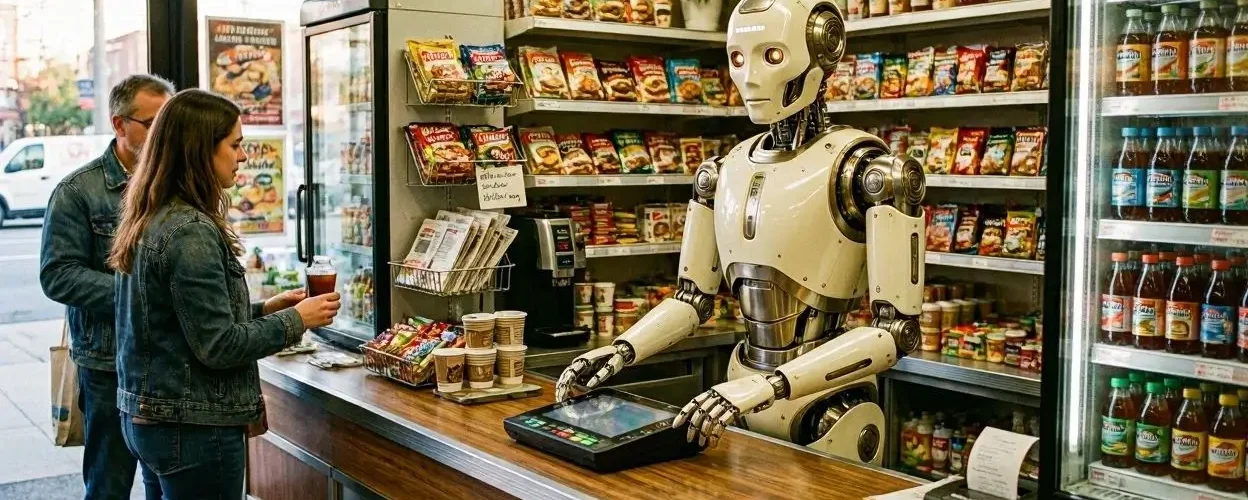
Picture this: You walk into a brightly lit 24-hour convenience store on Hong Kong’s waterfront, and instead of a tired night-shift worker behind the counter, a sleek humanoid robot greets you with a friendly “How can I help you today?” — in Cantonese, English, Mandarin, or even other languages. This isn’t a scene from a sci-fi movie. It’s happening soon in Hong Kong.
The city is preparing to open its first convenience store operated by a humanoid robot, a significant milestone in its aggressive push to embrace artificial intelligence in everyday life. Announced by Financial Secretary Paul Chan Mo-po, this project highlights Hong Kong’s ambition to become a leading hub for AI innovation in Asia.
Details of the Groundbreaking Store
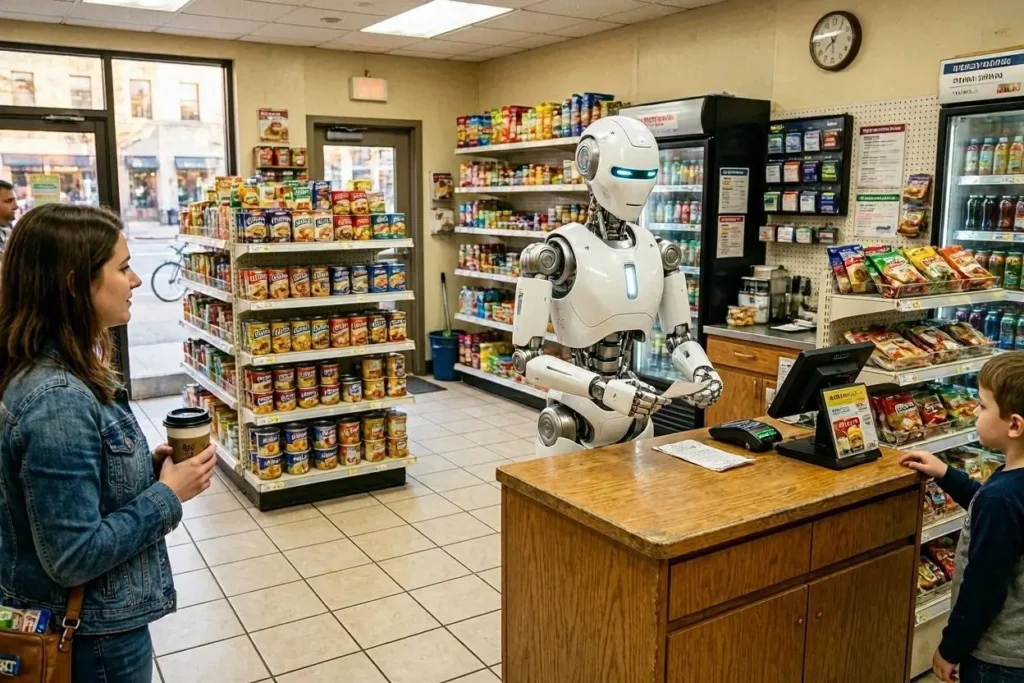
The new store will be located on the vibrant waterfront in Hung Hom. It will operate 24/7, offering the ultimate convenience for locals, office workers, and tourists alike.
Developed by Beijing-based Galbot, this marks the company’s first venture outside mainland China. Galbot is already known for its “Space Capsule” robot-operated stores in Beijing locations like Zhongguancun and near the Summer Palace. Their humanoid robots, such as the G1 model, have demonstrated impressive capabilities in real-world retail settings — greeting customers, handling orders, preparing items, and even autonomously charging themselves.
According to reports, the robot in Hong Kong will be able to:
- Serve customers fluently in multiple languages
- Take orders accurately
- Retrieve, prepare, and hand over snacks, drinks, and daily essentials
- Provide a seamless, interactive shopping experience
This is a prime example of embodied AI — advanced robots that combine physical dexterity with intelligent decision-making to operate effectively in unstructured real-world environments.
Hong Kong’s Broader AI Push Under Paul Chan
The robot store announcement is part of a larger strategy outlined by Financial Secretary Paul Chan Mo-po in his weekly blog and recent budget speeches. Hong Kong is not just dipping its toes into AI — it’s diving in headfirst.
Key initiatives include:
- The formation of a high-level Committee on AI+ and Industry Development Strategy. Its first meeting is scheduled for this month, bringing together experts, academics, and industry leaders. The committee will focus on applications in life and health sciences, embodied AI, transport, cultural industries, and sustainable development.
- The “AI Training for All” program, backed by HK$50 million (about US$6.4 million). Over the next two years, this initiative aims to train 50,000 residents through courses, seminars, and competitions. Programs will be tailored for different groups, including students, working professionals, and the elderly.
- Significant investments in computing power, with Hong Kong targeting a massive increase from the current 5,000 petaflops to 180,000 by 2032.
Hong Kong was chosen as Galbot’s international launchpad due to its open market, international connectivity, and role as a global showcase for new technologies. The government sees this as an opportunity to make AI feel accessible and practical rather than distant or intimidating.
What This Means for the Future of Retail and Daily Life
Robot-operated stores are no longer experimental concepts limited to tech hubs in Beijing or Shanghai. With over 20 Galbot-powered autonomous stores already operating across multiple Chinese cities, the technology is maturing rapidly. Customers report smooth experiences — from grabbing a late-night Coke to more complex interactions.
For Hong Kong, this project carries multiple benefits:
- Boosting competitiveness: Helping the city stay ahead in the global AI race against Singapore, Shenzhen, and other innovation centers.
- Addressing labor challenges: Retail and service sectors often face staffing shortages, especially during night shifts.
- Public education: By placing advanced robots in everyday settings, residents can interact with and better understand AI.
- Tourism appeal: A futuristic store on the Hung Hom waterfront could become an attraction in itself.
Of course, challenges remain. Questions about job displacement, robot reliability in busy environments, data privacy, and customer comfort with non-human service will need addressing as the technology rolls out.
Would You Shop with a Robot?
This humanoid robot convenience store is more than just a novelty — it’s a window into how AI could reshape retail, hospitality, healthcare, and many other sectors in the coming years.
As embodied AI advances, we might soon see robots delivering packages, assisting in hospitals, or even teaching classes. Hong Kong’s proactive approach positions it well to lead rather than follow in this transformation.
What are your thoughts? Would you happily buy midnight snacks from a humanoid robot, or do you prefer the human touch? Have you experienced similar AI services elsewhere?
Sources: South China Morning Post, official government announcements, and Galbot project reports.